
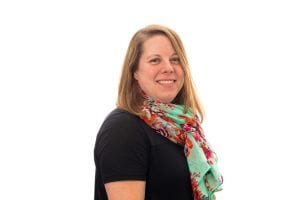
 Staff wellbeing is the top priority for global health and safety manager at RX Emma Dengate. As chair of the cross-association working group for health and safety, she has seen that two years of postponements has added huge pressure onto staff, but she tells Emily Wallin that by working together we can keep teams happy and safe and exhibitions up and running
Delays, postponements and understaffing are piling the pressure on teams, says Emma Dengate, global health and safety manager at RX.
Through her role as group chair of the cross-association health & safety working group (AEO/ AEV/ ESSA) she has seen how the immense workloads organisers are dealing with are not letting up as events get back in business. In fact the contraction of events into short time periods, supply chain issues and recruitment crisis are all presenting new risks for teams.
The pandemic also presented a new dawn for health and safety teams – who were transformed from the “no department” to the forefront of getting events up and running again.
“The single biggest issue in terms of health and safety is welfare,” she tells EN.
“This issue has been exacerbated by the talent drain out of the industry and with many teams working with less resource.
“The compression of all the events after postponements and the contraction of suppliers availabilities adds a lot of pressure. I think we’re now past now, the will it be cancelled? Will it not be cancelled situation, but we definitely had that for a while and that inevitably added even more stress for everyone.
“The need to get new people recruited can also add additional stress and concern. When you don’t have the time and space to recruit, and then do the induction process and train them up and teach them all what to do. It’s almost like an extra job to have a new person on your team. But this is such an important element of making sure we retain anyone new to the industry in the longer term.”
Post-pandemic positivity
The AEO, AEV and ESSA’s cross-association working groups started meeting more regularly, through the pandemic, and opened up more honesty about struggling to cope, Dengate says.
“One of the big positives that came out of the pandemic is we switched the cross association working group meetings to monthly and online. We really did build up a community where we were all supporting each other, we were all sharing, it became a lot more normal to talk about the concerns, the anxieties, the stress, mental health.
The AEV HR Working Group lead led to the creation of a mental health tool kit called Heads Up with resources to help teams with their mental and physical health.
Dengate continues; “I think that’s so important so people are hopefully more willing to put their hands up and say, ‘I’m not dealing with this at the moment’, or they’re a lot more open about discussing it.”
“I think safety often gets a bit of a bad rap because you think “health and safety says no, you can’t do it”.
“Through Covid-19 health and safety teams have been thrust into the forefront of everyone’s minds and really showed how important safety can be to business confidence. I’d like to hope that safety is no longer seen as the ‘no department’, but that it has allowed us to put together plans and processes and to build that business confidence to enable us to and open
up again.
“I think we really have been able to show that we can enable business, by showing that events are safe.”
Practicalities
Small changes to working on the build and breakdown of exhibitions can make a huge difference to team’s welfare Dengate says.
“I think we’ve all looked at what can we do to improve everyone’s welfare when we’re on site and a sub group of the H&S working group has looked at some practical solutions, and we have produced some guidance, a minimum standard that can be used during the planning process. It looks at what catering outlets are going to be open, the timings that they’re open. It’s no good if they close at five, if your build is till 10 and everybody needs to go and have dinner somewhere.
“And having a quieter space, having space with tables and chairs, so people can sit down and have their lunch, having tea and coffee, making facilities and all this kind of stuff.
“Everyone should take a minute and make sure the basics are in place – like having toilets open, and to be able to get a cup of tea.”
Future
As we hopefully move past the peak of Covid-related cancellations, there are now developments on the horizon that could affect teams.
Incoming Protect Duty legislation and advances in alternate energy will both bring imminent changes.
“As with Covid-19 I am certain that the industry will come together and find practical and appropriate solutions,” Dengate says.
“As an industry we have proven that we can open events safely using the All Secure guidance which is based on a risk assessment approach. One thing, that’s still a Covid-19 consideration is business continuity. If you have a team that goes down with Covid-19, do you have a plan?”
Teamwork
By sharing knowledge organisers can prepare their teams for the future of technological innovation and new legislation.
“By having these discussions with other organisers, venues and industry suppliers, we are able to share, ‘we did this and it worked, or it didn’t work’. “Safety considerations often cut through any corporate confidentiality. We’re just trying to raise standards and make our events safe for everyone.
“I’m always so impressed with the amazing sharing attitudes we see within the group which benefits everyone.”
By working together the industry can stay happy and healthy.