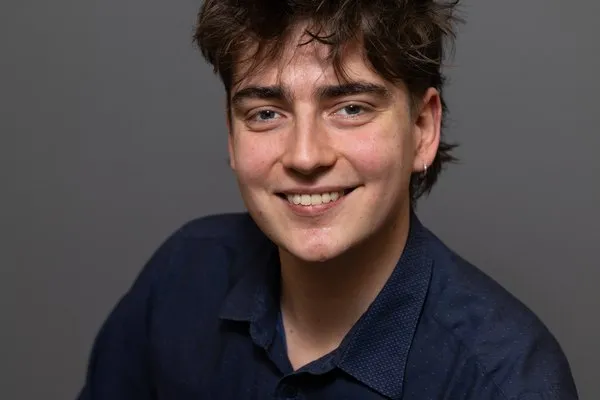
Over the course of the EN 30underThirty programme, Exhibition News will be speaking to members of the programme about their professional journey and the causes they’re championing to shape a more inclusive, forward-thinking industry.
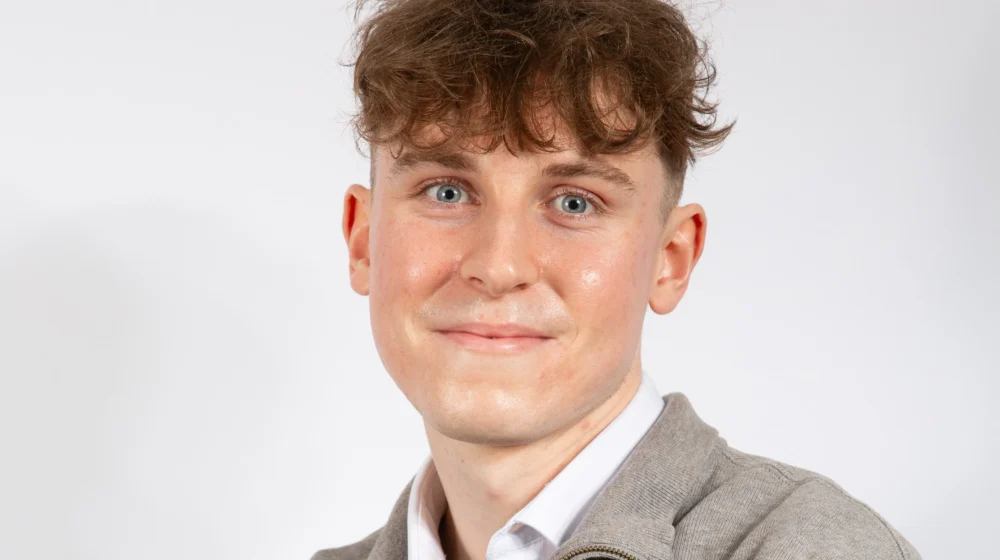
This week, we meet Tom Mead, senior digital marketing executive at Easyfairs.
What made you want to get involved in the industry and why?
I was fresh out of university, finishing my master’s and job-hunting, when I came across Easyfairs. I was drawn to their specialist shared services team, Marketing Intelligence Technology (MIT), and how data-led the business is — every decision is backed by evidence. I got hooked on the mix of creativity and performance marketing that events demand: you’re not just running an ad; you’re helping fill a room with the right people.
First career highlight?
A career highlight for me is winning the AEO’s People Award for ‘Newcomer of the Year’. It came not long after joining the MIT team, and it meant a lot to have my work recognised at that stage — it gave me a lot of confidence.
What have you learned about yourself since entering the events world?
I’ve learned to get comfortable with the data early — in events marketing, the numbers tell you what’s actually working faster than instinct does. I’ve also learned I enjoy both the creative and technical sides of the job; I’m not purely a “numbers person” or a “campaigns person,” and events marketing is one of the few places you get to be both. I tend to work best when I understand the why behind a decision, not just the what.
If you could give your younger self one piece of advice when starting out in events, what would it be?
Stay curious and always ask why. You learn far more from understanding why something is happening than from accepting the answer at face value. I’d also tell myself not to be afraid of asking what might seem like an obvious question.
How important are schemes such as EN30under30 and do you believe the industry does enough to support young professionals?
Schemes like the EN30under30 are great for young professionals entering the industry. Events is an industry a lot of people fall into, so having a visible cohort of young professionals doing well gives others a reason to see it as a genuine career path, not just a stopgap. I’ve thoroughly enjoyed my time in the industry and at Easyfairs, and I couldn’t image myself starting my career in another industry.
How do you see the events industry changing over the next five years, and how do you want to be part of that change?
Coming from a digital background, I see the industry shifting from being data-aware to truly data-led — more personalised marketing journeys, and AI reshaping how campaigns are built and how audiences find us online. AI has already reshaped the traditional marketing funnel, and the digital team at Easyfairs is working hard to enhance the user journey without losing sight of the human side of our audience. AI is a brilliant tool for streamlining our work, but we can’t forget we’re ultimately talking to people.
What is an issue or topic within the industry that you think is important and want to champion? Can you explain a bit about it?
I want to champion better AI visibility and user journeys on event websites — making sure our sites are genuinely discoverable when people search using AI tools, and that once someone lands on the page, the messaging is personalised enough to actually answer why they came. We often build a website around what we want to say as the organiser, rather than around the handful of questions a visitor or exhibitor actually has: is this show relevant to me? What will I get out of attending? How do I register?
Why is this particular issue or topic important to you?
It’s one of the job’s I sit closest to day-to-day, so I see the gap firsthand — a user might drop off our website not because the event isn’t relevant to them, but because the website never got them the answer fast enough. As AI-driven search becomes a bigger route to discovery, that problem only gets bigger: if our content isn’t structured to answer the exact questions people (and now AI assistants) are asking, we simply won’t show up.
What do you plan to do to continue to champion the topic?
We’ve invested heavily in our SEO and GEO (Generative Engine Optimisation) strategies to make sure we’re discoverable across the whole search landscape. Traditional SEO isn’t redundant, but it’s essential to address the shift in how people now discover events through AI-powered search. We’re focused on building topical authority — being recognised as experts in our industry — while never losing sight of the human side of our websites and the content our users actually want.
What can the industry itself do to better champion this topic?
Our websites are our shop window — where visitors come to see what we offer. I think it’s important that the industry treats website experience and AI discoverability as core to the event itself. That means investing in the people and tools that shape the digital journey, sharing best practice across organisers rather than everyone solving it alone, and being willing to rebuild content around visitor and exhibitor questions — even when that means moving away from messaging that speaks more to ourselves than to our audience.