
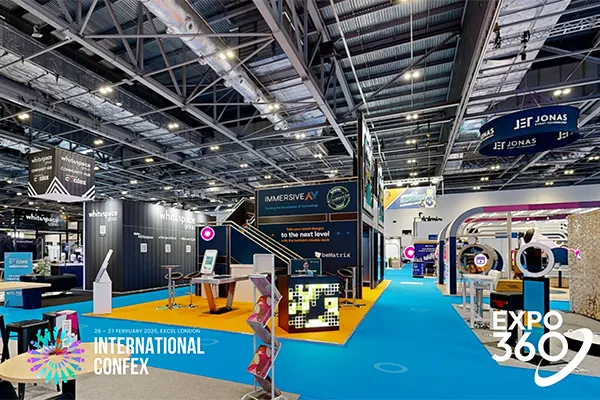
Expo360 founder and CEO Alan Tisch speaks to EN on how Covid-19 accelerated the shift to hybrid events, blending in-person and virtual experiences. What started as a necessity has become a lasting trend, offering greater accessibility, global reach, and enhanced flexibility.
We all remember (not so fondly) attending the CGI “exhibitions” during lockdown – The one positive that came out of this awful time is that we fell in love with face-to-face events again. Like when you go to university and suddenly REALLY appreciate your parents; we found a new level of appreciation for face to face.
However, something had changed, the events industry, particularly large-scale trade shows and exhibitions, have without doubt undergone a seismic shift since the onset of the Covid-19. We are seeing that change is possible, with the sector embracing the hybrid model, blending in-person and virtual experiences.
Here’s how the hybrid model, underpinned by technological advancements, is reshaping trade shows and exhibitions:
Expanded reach and accessibility
Pre-Covid, trade shows were predominantly physical events, limiting attendance to those who could travel. The hybrid model has broken down geographical barriers. Virtual platforms allow exhibitors to engage with a global audience without the need for attendees to travel.
Live streaming, on-demand content, and interactive digital twins ensure that remote attendees can enjoy some of the same experiences as in-person participants. This inclusivity has significantly boosted event participation, with some shows reporting double or even triple their pre-pandemic attendance numbers.
Enhanced data-driven Insights
The integration of technology has revolutionised how event organisers collect and utilise data. From registration to post-event engagement, digital platforms provide detailed analytics, including attendee demographics, behaviour, and preferences.
Hybrid events offer even more opportunities for data collection. Virtual attendees’ interactions can be tracked in real time—clicks, downloads, and chat activity, for instance—providing exhibitors with actionable insights to refine their strategies and measure ROI with precision.
Revolutionising networking opportunities
Networking has always been the backbone of events and trade shows. While face-to-face interactions remain irreplaceable, virtual networking tools have added a new dimension. AI-powered matchmaking apps, virtual business card exchanges, and live chat functions connect attendees and exhibitors seamlessly, ensuring no connection is missed. Hybrid models also allow for extended networking windows. Post-event, attendees can revisit real world digital twins of the event and visit stands they did not have time to visit, review content, and follow up with contacts, enhancing the overall event value.
Showcasing Innovation with Immersive technologies
The rise of immersive technologies like virtual reality (VR), augmented reality (AR), and 3D modelling has redefined exhibition spaces. Virtual tours (or digital twins as they are often called) can now turn the real world physical into interactive walkthroughs, creating a digital legacy of the event to give everyone in the world that wanted to attend the opportunity to do so. They also provide the exhibitors with a year-round marketing and lead generation asset.
Cost and sustainability benefits
Hybrid events address one of the biggest challenges of physical trade shows: cost. Hosting attendees virtually reduces expenses related to travel, accommodation, and logistics. Exhibitors can also save on booth setup and shipping costs by opting for virtual showcases. Sustainability is another driving factor. By reducing travel and resource consumption, hybrid models align with the growing demand for environmentally conscious business practices, helping organizers meet corporate social responsibility (CSR) goals.
Challenges and adaptation
While the hybrid model offers numerous advantages, it isn’t without challenges.
The essence of events/tradeshows haven’t really changed for 150 years. To change the industry culture of “big build up – 2 crazy days of face to face aaaannd relax” is not an easy ship to change course.
Balancing the physical and virtual elements requires careful planning and investment in robust platforms. Organisers must also ensure that both in-person and remote attendees feel equally valued.
Moreover, digital fatigue can impact engagement. To address this, trade shows are leveraging gamification, interactive polls, and live discussions to keep virtual audiences engaged.
Conclusion: the road ahead
The hybrid model is no longer a trend—it’s the future of trade shows and exhibitions. As technology continues to evolve, so will the opportunities for innovation in this space. From AI-driven personalisation to holographic and AR displays, the possibilities are limitless.
Organisers and exhibitors who embrace the hybrid model are not just adapting to change; they’re leading the transformation. By leveraging technology, they are creating experiences that are richer, more engaging, and inclusive than ever before.
The pandemic accelerated the adoption of hybrid models, but their staying power lies in their ability to address the evolving needs of a global, tech-savvy audience. Trade shows and exhibitions that invest in hybrid experiences are well-positioned to thrive in this new era.
As an event technologist, I believe the hybrid model is not just reshaping how we connect, but it’s also redefining the very essence of what trade shows and exhibitions can achieve.
This comes as announced that Expo360 will once again partner up with International Confex 2025 at Excel London.