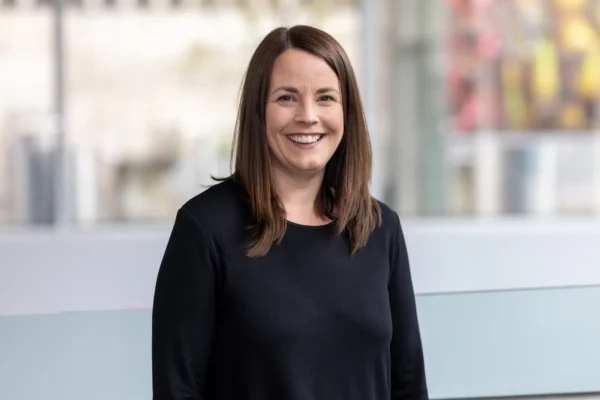

Women make up around 70% of the global events workforce but their stories, leadership, and influence are often underrepresented. The 70% is a weekly series celebrating the women shaping the events industry. From rising stars to seasoned leaders, each profile shines a light on the career journeys, challenges, and perspectives of women working across all corners of the sector. In this edition, we speak to Zoe Light, head of events at assembl. group.
In this edition, we speak to Zoe Light, head of events at assembl. Group.
How many years have you been in the events industry?
I have been in the industry since the beginning, starting my first “proper” job at an events agency in 2013. Initially, I planned to work with horses as a travelling groom, so I was studying for a degree in Equine Management. However, an event management module in my course sparked my passion for live events. I loved the fast-paced nature of the work, the satisfaction of seeing my efforts come to life, and the potential to see the world. The events industry ticked all my boxes, and because of this, I decided to pursue a career in event management after completing my degree. Twelve years later, I have never looked back and still love what I do.
How do you balance professional growth with personal commitments, and do you think the industry is evolving in terms of work-life balance?
This is an interesting topic as there is no one-size-fits-all approach; every day is different. With more focus on mental health, the industry feels more transparent and accepting of work-life balance, after all, we are only human. But, it’s a give and take thing – employees need to give their best to their work, but that might be 100% on some days, and 40% on others. Life ebbs and flows, and agencies are beginning to realise that sometimes things happen, so their teams need extra support.
My professional growth and personal commitments are intertwined with the huge events community. My non-industry friends and family see me jetsetting around the world, but don’t appreciate the hard work that goes on behind the scenes. I’ve found that industry peers have become friends as we can relate to each other’s busy lifestyles and support each other, whether offering advice, being each other’s champion, or just letting our hair down together. It’s so helpful to have that network behind me.
How do you see the events industry evolving in terms of diversity, equity, and inclusion?
Reflecting on my career, DE&I has come on leaps and bounds. I know people think we’re still lacking, but it’s important to look back at where we’ve come from. We’re far more aware these days. However, there is a delicate balance we need to achieve for fairness so that everyone has the same opportunities, versus a box-ticking exercise. For example, selecting the best person for a job role or the most informed person for a panel, whilst being aware of equal opportunities but not succumbing to filling a diversity quota. Through our asembl.adademy and what we’re doing with The Power of Events, we’re trying to educate youngsters early on about the industry with the aim that we see more diversity come up through the ranks naturally and everyone has a fair chance to join the industry.
What advice would you give to young women looking to enter and succeed in the events industry?
The events industry is very much a work hard, play hard industry with big personalities. We’re all guilty of comparing ourselves, and impostor syndrome creeps in, so my advice is not to get caught up in the noise of others and take a moment to step back, breathe and do your own thing. Also, using the strength of the community, widen your network and take up mentoring opportunities when you can is another top tip – recently, I was fortunate enough to win the ‘All About People’ award, voted by a room full of people who i’ve had the pleasure of building relationships with over the years. Relationships are powerful, and even though we’re technically competitors as agencies, there is camaraderie, and we elevate each other.
How do you handle setbacks and failures?
I try not to see it as a setback or failure. It sounds cheesy, but things are sent to test you and strengthen you. It’s an opportunity to learn. Instead of allowing a setback to be a low blow, I pick myself up and try to understand what I could do differently next time. It comes from my past in team sports and rallying up the team – don’t wallow, keep the momentum and learn. Ask yourself, ‘What could we do differently next time?’ I look at my career as a project in itself, and if something hasn’t worked, it’s not a setback, just a different path to your end goal.
What changes do you think are still needed to create more opportunities for women in leadership?
We are surrounded by strong male personalities, and although many of them advocate for women, they often don’t realise how overpowering they can be. As a result, it can be challenging for women to put themselves out there. I believe that access to more female-led leadership mentoring would help women find their voice and reach their full potential. This would not only encourage junior women to pursue leadership roles but also provide support to those who are already in such positions.
I recently attended the CN Leadership Summit, where I made invaluable connections. It made me realise that just because a woman is in a leadership role and is perceived to have “made it,” it doesn’t mean she doesn’t need others to learn from or share ideas with. As women, we need to support one another and have each other’s backs, both professionally and personally.