In this series, we talk to organisers at some of the world’s leading events companies about pressing issues in the industry – giving you direct insights from lived experience.
This week, the topic is launching events in the US.
Thanks to Kate Chambers (former MD at Clarion Gaming), Natasha Jackson, (group operations director at Terrapinn), Heather James (portfolio director at Clarion) and Shannon Kilgariff (event director at Easyfairs) for their contributions.
1. Costs are high – and hard to predict
The US is expensive. But contributors say that the bigger challenge is not always the headline price – it’s how difficult costs can be to predict in advance.
- “Union labour rules caught us off guard – costs and restrictions vary significantly by venue and city, and it’s easy to underestimate the impact on your P&L.” (Heather James, portfolio director at Clarion)
- “Understanding union labour laws and pricing between different states when this doesn’t apply in other countries around the world can be incredibly frustrating as a newcomer, but it also becomes very difficult to forecast accurately. Quite often there are hidden costs and huge extra labour costs we don’t foresee.” (Natasha Jackson, operations director at Terrapinn)
- “The biggest pressure point was understanding how different the commercial and operational structure is in North America compared to the UK or Europe. Negotiations are more complex and less flexible, particularly around venues, unions, and service providers, which drives up costs quickly. The overall cost base is significantly higher, and there is less room to manoeuvre once contracts are in place.” (Kate Chambers, former MD of Clarion Gaming)
Organisers say that even basic items can cost far more than expected.
- “The price for standard furniture rentals and graphics… is bewildering.” A white lockable counter, according to Natasha Jackson (Terrapinn), costs:
o UAE: $86
o UK: $173
o USA: $763

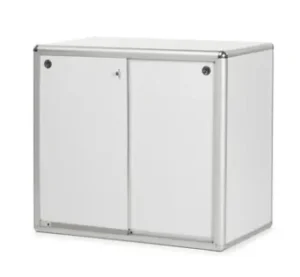

Figures supplied in April 2026. Prices may change over time.
2. The US is not one market
Treating the US as a single territory is a common mistake, according to organisers. Regional differences can shape everything – from audience demand to what regulations you face.
- “The US is not one market, so geography and state dynamics add another layer when planning audience and exhibitor strategy.” (Kate Chambers, former MD of Clarion Gaming)
- “East coast vs west coast vs central all have different audience pools, travel behaviours, and local market volumes.” (Heather James, portfolio director at Clarion)
- “One thing to note is differences that may impact your industry. For the US, different states have different regulatory landscapes with different laws. These require consideration. It’s key to understand these cultural nuances.” (Shannon Kilgariff, event director at Easyfairs)
For organisers, that means expansion plans need to be built city by city – the US is not a singular entity.
3. Organisers say city choice matters more than prestige
Several organisers warn against choosing a launch city purely for reputation. A famous destination may be attractive, but that doesn’t mean it is where the strongest audience resides.
- “The ‘destination vs convenience’ tension is real – a sexy venue city isn’t always where your audience will actually show up.” (Heather James, portfolio director at Clarion)
- “Prioritise cities with stronger local market density – don’t rely on people travelling, especially for a first edition.” (Heather James, portfolio director at Clarion)
4. The market is huge but competitive – you need a strong position
The scale of the US market is a major draw. But according to organisers, that scale brings a lot of competition – especially in established sectors.
- “The market is huge, but it’s crowded. Standing out requires a much sharper positioning story than you might need elsewhere.” (Heather James, portfolio director at Clarion)
- “In some markets you’re creating demand; in the US you’re competing for attention – different problem, different strategy.” (Heather James, portfolio director at Clarion)
- “Standing out [is key] in a competitive market. There are lots of events in the US and it seems that many use the same cities, as they are best equipped for hosting them. However, that can mean it feels “samey” for the community and not an industry need.” (Shannon Kilgariff, event director at Easyfairs)
That means a clearly articulated proposition is necessary.
5. Hire local personnel. It will save you money
Several organisers in our community stressed the importance of having experienced people on the ground – whether that’s through internal hires or external partners.
- It’s important to have a “local team skillset / connections etc to service and support from the ground. There are important trends in the industry that might be different to UK markets to consider.” (Shannon Kilgariff, event director at Easyfairs)
- “Hire USA personnel with extensive experience in running large-scale exhibitions across the USA. There are tricks to the trade and loop-holes which as international organisers we’re unaware of and which aren’t often shared when you don’t already have a network out there.” (Natasha Jackson, operations director at Terrapinn)
- One of the main issues was “the issue of visas, and getting trained staff into the US”. (a UK agency founder who wished to remain anonymous)
Without local expertise, it’s easier to misjudge costs, timelines and operational requirements.
6. The US works differently to other markets you’re used to
There are a lot of differences in the ways events are delivered and experienced in the US – it’s not just cost and logistics.
- “The US market is more structured and less forgiving. Once you commit, expectations on delivery are high and timelines are tight. The scale is attractive, but it comes with operational intensity and higher financial exposure.” (Kate Chambers, former MD of Clarion Gaming)
- “Commercially, it is more transactional, with less reliance on long term relationship building compared to Europe.” (Kate Chambers, former MD of Clarion Gaming)
- “Health & Safety practices in the USA are very different to those of the UK and EU. What we want to apply as a standard operating procedure becomes difficult, confusing and quite often opposed by exhibitors and contractors.” (Natasha Jackson, operations director at Terrapinn)
- “Sustainability efforts are very slow to progress compared to those of the rest of world. We’ve come a long way over the last two years, but getting accurate data and in a timely manner so we can calculate our carbon footprints is challenging.” (Natasha Jackson, operations director at Terrapinn)
When launching in the US, success often depends on adapting your model to the market, rather than repeating what works elsewhere. Get in touch with us if you have any more questions about how to launch a new event in the United States here: treilly@mashmedia.net