
In this series, features and series developer Heather Nicholls speaks to the unsung heroes of the events industry to reveal what really drives their passion and the remarkable contributions we too often overlook.
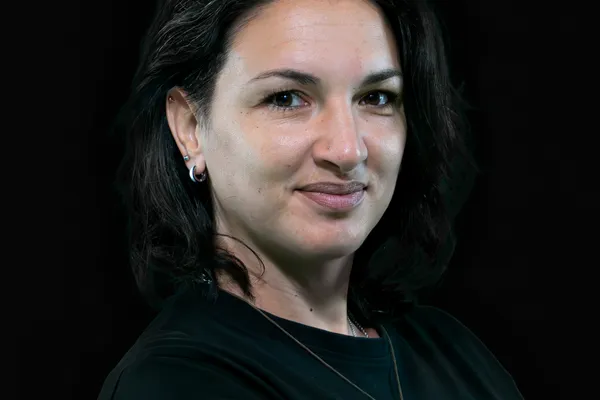
In this edition, we meet Ana Domingo, events and diary manager at Church House Westminster.
Domingo first found her love for the events industry during her time at university. She was studying a for a tourism degree in her home country of Valencia and as a part of that degree she learnt about conferences as a form of business tourism. She said: “My interest was piqued, so I took the opportunity to do a placement supporting the organisation of an economics conference.”
The placement included al elements of event management, from liaising with delegates to arranging accommodation and taking minutes for meetings.
Over 20 years after first dipping her toe in the industry, and decades of experience later, she has worked her way up from C&B coordinator to events coordinator and then from senior events coordinator and then from senior events coordinator to her current role as events and diary manager. She said: “For much of this time, I’ve been at Church House Westminster, a unique London event venue which has supported my ambition, invested in my development and championed my skills. I couldn’t imagine working anywhere else.”
Domingo was first attracted to the role because she loved the challenge and the organisational skills required. She said: “Managing the diary, for example, to decipher how we can make different events with different needs fit in a way that works for both the clients and for us. It’s a bit like Tetris, but for adults, and certainly keeps me on my toes.”
She added: “I also love learning and achieving the objectives of each event – every one is different and a challenge in its own way and there’s nothing like the buzz of hitting these and knowing how happy the client will be as a result.”
Quick Q and A:
What does a typical day look like for you on-site?
‘Typical’ is definitely not the word I’d use to describe my days. Some days I might start work at 5am to get everything ready for a client coming in early, on other days I start work at 5pm and finish at 1.30am. Some days I spend my time supervising the floor and barely sit in front of my laptop, on other days sitting in front of my laptop is all I do – everything depends on the needs of the client, and a key part of my role is being flexible and adaptable to these needs.
If your job didn’t exist, what do you think organisers or attendees would miss most?
I think they would miss the ease – from the event management side, if my job didn’t exist, clients would need to talk directly to the catering team, the AV team and the porters team, for example. I do all this for them now and relieve the complexity of managing multiple different elements separately but simultaneously. In this scenario, the responsibility for ensuring everything works together would fall on the client.
From the diary management perspective, it gets so busy for coordinators taking enquiries that having someone chasing enquiries and payments helps get things moving. For the client, this means their event progresses more quickly and the process is smoother and more personalised. That would be lost if my job didn’t exist.
What’s something most people don’t realise about your job?
Probably just how big a part logistics plays – how the role of an Events & Diary Manager is very much about understanding the bigger picture in order to ensure that each micro element of an event works, and does so perfectly alongside all other elements. Essentially, an Events & Dairy Manager is the link between a client’s vision and turning this into a reality that works with what you have to offer on the ground.
What’s the toughest challenge you’ve faced during an event?
I’d say tight turnarounds. Sometimes, clients can extend the time of their event as it’s happening or take longer than usual to leave, for example, and this directly impacts the amount of time we then have to set-up for the next event – especially if that client turns up early!
Chasing confirmation for a last-minute booking for the following day can also be challenging, even more so if the decision-maker is unavailable and you need to confirm crucial information that affects preparation and set-up.
What’s one event you’ll never forget working on and why?
It has to be a large corporate members event I worked on annually for several years – and when I say large, I mean it. Their membership kept growing year-on-year, and this meant we had to be very creative with the combination of our room set-ups to fit them all into the space. We actually managed to host their event for a year longer than we thought would be possible, but unfortunately, in the end, they outgrew us. Much as I’m happy their membership kept expanding, I do miss them and will always have a bit of a soft spot for them. We loved working with them and, if it wasn’t for capacity, still would be – and very happily so.
What’s been your proudest moment so far?
Without a doubt, it has to be being part of the team that ran receptions for her late majesty, Queen Elizabeth II’s, funeral and the coronation of King Charles III. Both were an incredible honour, and also very special personal and professional moments given the history and significance of what was taking place. I was also immensely proud of my colleagues – in doing these events justice, we demonstrated the very best of Church House and the amazing team we have here.
Domingo explains that when she started to work in events, organisers looking for event pace did this as their main job. She said: “Post-Covid though and, to be honest, even a little bit before it, people like Administrative/Executive Assistants were being tasked with this alongside their main jobs. This could cause them a lot of stress, so part of my role now is offering guidance to these organisers as they navigate their new remit.”
She adds: “I measure success in my role in two ways, both with happiness as their heart. On the one hand, by having happy clients that return for future events, as well as new clients that come to Church House, through word-of-mouth about our reputation. On the other hand, by having happy colleagues who enjoy what they do. Both are crucial for successful events.”
Domingo explains that her role is vital to the success of an event because as events and diary manager it is her role to ensure the diary is as clear as possible to enable the maximum number of events to take place. She said: “I’m also the person who gathers information from the client about what they need. I then act as the “translator” of this vision to shape what’s possible in the space. This understanding of the client and their needs is vital because, for their event to be a success, it’s essential I’ve garnered the correct information and passed this on fully to all teams involved.”
She continues by explaining that at its heart, her role is about communication. She said: “It’s my job to explain to the client what we can do within the space and how it will work with their needs, as well as guiding them, where needed. It’s also my job to gather as much information as possible and pass this on to all relevant teams, including any changes, so everyone understands exactly what’s needed to deliver for the client. Keeping this communication flowing is what gives us the best chance of success.”
She concludes: “Recognition isn’t something we look for, but if I had to pick a reason I’d say it’s because people in jobs like mine have to be mini experts and understand a little bit of everything to know what works and what doesn’t – from AV to catering to the space required. People also don’t always understand the long and varied hours we need to work to run an event successfully – lucky for me though, I met my husband working in events, so he gets it.”