

CEO dmg Events and former UFI past president Geoff Dickinson talks pioneering work in the Arabian Gulf, making human connections and grasping the new opportunities presented by AI and technology in this exclusive interview with EW:
dmg events has established itself as the largest exhibition organiser in the Middle East, in terms of presence. What have been the key factors behind this dominant market position, and how has the region’s rapid economic transformation shaped your strategy over the years?
We came to the region circa 30 years ago and were early players in the region. We could see even back then that the Arabian Gulf countries were growing at pace. They also understood the power of trade fairs to attract foreign companies to establish trading relationships and ultimately establish presences within the region. Dubai was very much a leader in supporting trade fairs and conferences to provide gateways for companies to the Gulf.
This is a region with huge ambitions and we very quickly understood the benefit of moving our global events business headquarters to Dubai. I am lucky to have a very good team across all the offices who are incredibly entrepreneurial, constantly developing new content for their events to build customer satisfaction and deliver strong event growth. Every year my teams launch numerous new and exciting events and we have 10 high performing offices operating events in nearly 30 countries.
Can you share some of the pivotal moments or decisions that cemented dmg events’ leadership in the region, and what differentiates your approach from competitors?
In 2010 we took a number of major strategic decisions. Firstly, we could see how much development was being planned by all the Gulf countries and we forged plans to develop events beyond the United Arab Emirates into multiple countries starting with Saudi Arabia. Developing early learnings and building out good relationships in the UAE, Saudi Arabia and Qatar gave us many advantages as an early mover. We could also see that it could be possible to dream big with our events. As an example, we developed an ambition to make ADIPEC the largest energy event in the world. Having major stakeholder support gave us a big advantage and Dr Sultan Al Jaber UAE minister of industry and advanced technology | ADNOC managing director and group CEO | XRG executive chairman | Masdar chairman as the driver behind all the strategy for ADIPEC has been transformational and inspirational.
In November this year ADIPEC delivered a staggering 239,000 visitors, nearly 2,500 exhibitors, and over 16,500 conference delegates. Our Big 5 Construction event in Dubai is also now one of the world’s largest and best attended events and we have successfully geo-cloned it into six countries with plans for two more soon.
dmg events is very focussed on compelling content with powerful strong leadership conferences. We are not margin focussed and we put high quality multi-layered powerful content foremost in our event thinking. We also place huge value on building out strong stakeholder relationships particularly with governments making dmg events connected and supportive of government policies and ambitions.
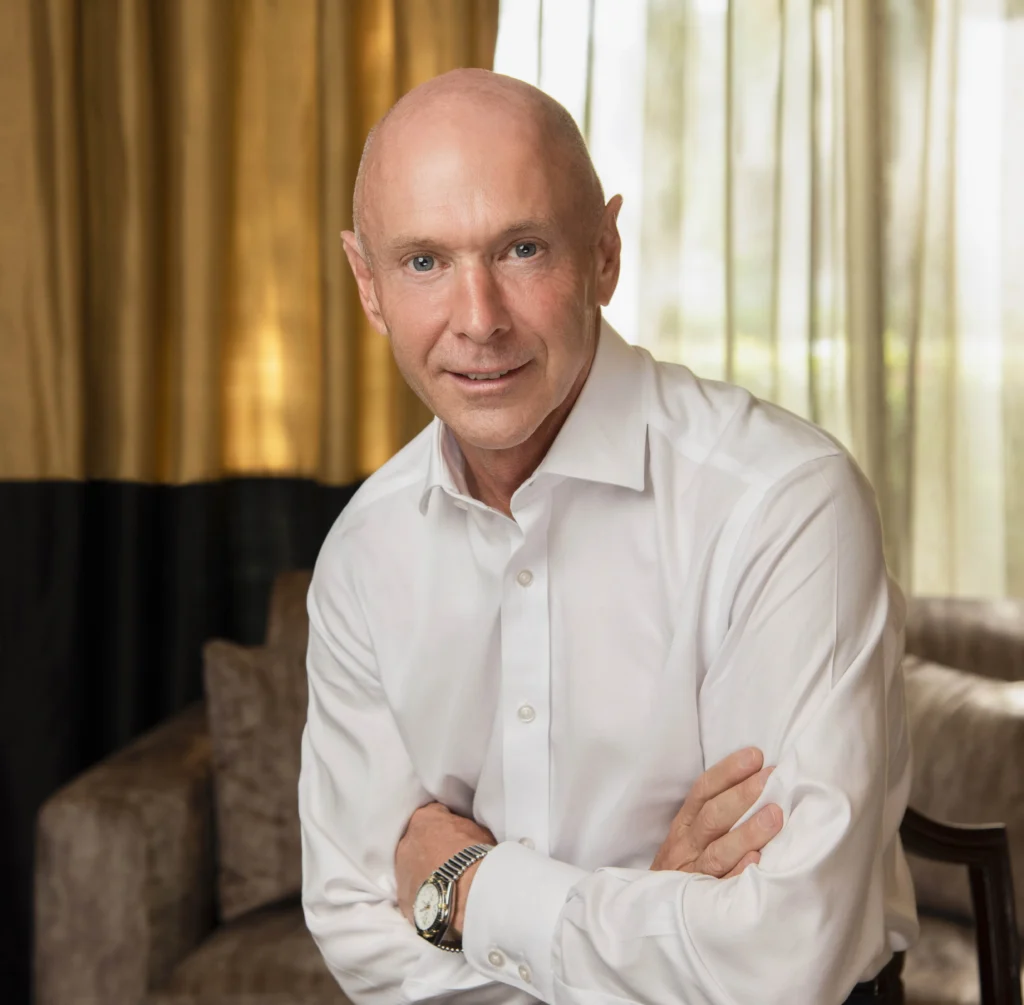
You’ve just concluded three years as part of the UFI presidential trio, including being president in 2023/2204. What were your primary objectives when you took on that responsibility, and looking back, what do you consider your most significant achievements during your tenure?
Serving as UFI president was quite possibly the highlight of my long career in events. I wanted to serve with passion and purpose as I have a huge regard for my peers across the events industry. I worked with colleagues to change and modernise the fee structure in a hope to build a better income stream for UFI to build out its excellent team in Paris to have greater resources and capabilities to represent the interests of all the members. I inherited good initiatives going into the role and my presidency really served, I hope, to further advocacy for events, to move the industry forward with sustainability and to ensure that the industry supports diversity and inclusion.
I have also been keen to see the industry embrace the adoption of new technologies and AI to make sure we evolve and advance to continue to serve our event customers to the very best of our abilities.
The global exhibitions industry faced unprecedented challenges during your time with UFI’s leadership. How did these experiences shape your perspective on the resilience and future direction of the industry, and what were the most valuable lessons you took from navigating this period?
I became very active with the UFI leadership during the Covid pandemic. This was a time that allowed some analysts to state that events would never fully recover post pandemic. There was an assumption that events would move online but it failed to understand the power of in person human-to-human connections. I never believed face to face events would decline – as I firmly believe human beings need to collaborate to work together to meet to share ideas both in terms of new thinking and new product advancements that, in turn, can help to advance human development and existence.
Human beings from the dawn of civilisation gathered together around camp fires in Africa to share ideas and new things they had developed to not only survive but thrive.
This period for me did two major things to my thinking. Firstly, it showed how collaborative the events industry could be. How we could work together to plan things, from running events with restrictions governed by safety and how we could work together to advocate for the power of events when the pandemic ended. Secondly, it made me far more connected with my peers at other major organisers and saw dmg events then forge many very successful partnerships with other event organisers, including Dubai World Trade Centre (Kaoun), Kolnmesse, Messe Munchen and, most recently, with Vietnam Exposition Centre and Deutsche Messe.
Now that your term as UFI past-president has concluded, what’s next for you personally and professionally? Are there new initiatives or areas of focus you’re particularly excited about pursuing?
I have been asked to stay on the Executive Committee of UFI, so I will continue to serve and work with great colleagues at UFI to support and advance our industry. I also serve on the board of SISO the US events association, working with many great industry friends and colleagues.
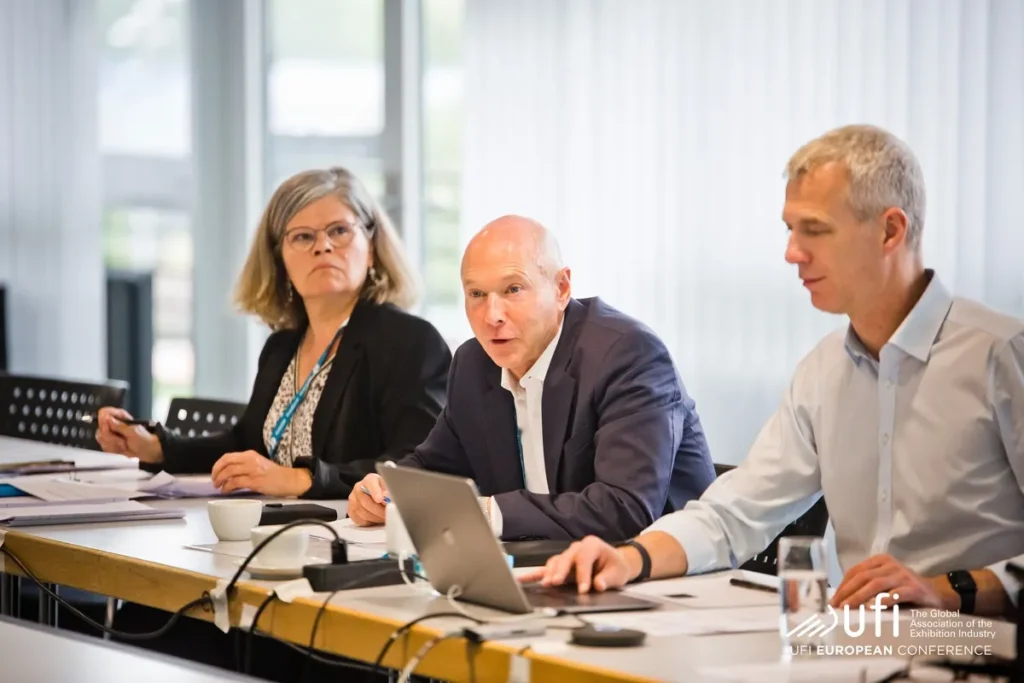
How do you plan to apply the knowledge and networks you developed through your UFI roles to benefit dmg events and the broader Middle East exhibitions sector?
UFI allowed me to engage with organisers and venues all over the world. This helped me develop incredible new friendships and partnerships that have undoubtedly helped dmg events pursue greater global ambitions and enter into many new exciting partnerships. UFI also provided an amazing opportunity to share learnings of best practices for sustainability and many other key areas where organisers can evolve to become better.
How would you characterise the current state of the global exhibition industry? Are we in a period of recovery, transformation, or reinvention; and what evidence are you seeing in your own portfolio?
Our events like so many others enjoyed much higher volumes of exhibitors, visitors and delegates when Covid ended. This proved how much people missed the irreplaceable need for important business face to face meetings. But because Covid was a major scare to the events industry, we like most organisers decided to return to operating with much stronger and more compelling content to seek to serve our customers even better and to evolve our events into comprehensive and enjoyable experiences that will endure long into the future. During Covid we evolved our technologies and in particular online presences to further engage customers on a more frequent basis. We have enjoyed growth for all of our events and launched a large number of highly successful shows to service customers in other geographies.
Digital innovation and changing buyer behaviours continue to reshape the exhibitions landscape. What do you see as the most significant trends or disruptions that organisers need to address in the next 3-5 years?
I do not believe digital innovation has been disruptive for exhibitions. Digital developments have been and are highly beneficial for events. Online events allow us the ability to extend the geographic reach of our events, particularly when some customers may not be able to attend for reasons such as travel distance or diary clashes. We can stay connected with these customers and continue to make them want to participate in person in the future. Digital allows us the opportunity to make connections at many other points during the year and by using AI we can be more efficient and we can use AI to lean more about our customers making our marketing more targeted and our event content ever more relevant. Exhibitions have existed for a very long time and have constantly needed to evolve.
This is now another moment in time that will see tremendous evolution that will see events become even stronger and reaffirm their status as the most effective means of gaining new learnings and making incredible human connections. Conference programmes, for example, will have no limits to who can speak as holographic technology becomes more affordable, accessible and easy to operate. Exhibition stands will have digitally enabled panels that can change the theme, look, feel and content of any stand in an instant and these panels will be re-usable and sustainable. Virtual reality can take a visitor on a stand to take part in a meeting or product demonstration on the other side of the planet.
These are exciting times for events with technologies that will allow us to offer extraordinary experiences combined with the irreplaceable face to face human connections that we provide.
What’s your vision for where the exhibitions industry will be in 2030? What opportunities and challenges should organisers be preparing for today?
If we embrace the future adopting the best and latest technologies, take sustainability seriously, whilst embracing Diversity and Inclusion we will continue to provide one of the most exciting industries to work in – and we will attract wonderful new talent to the industry.


