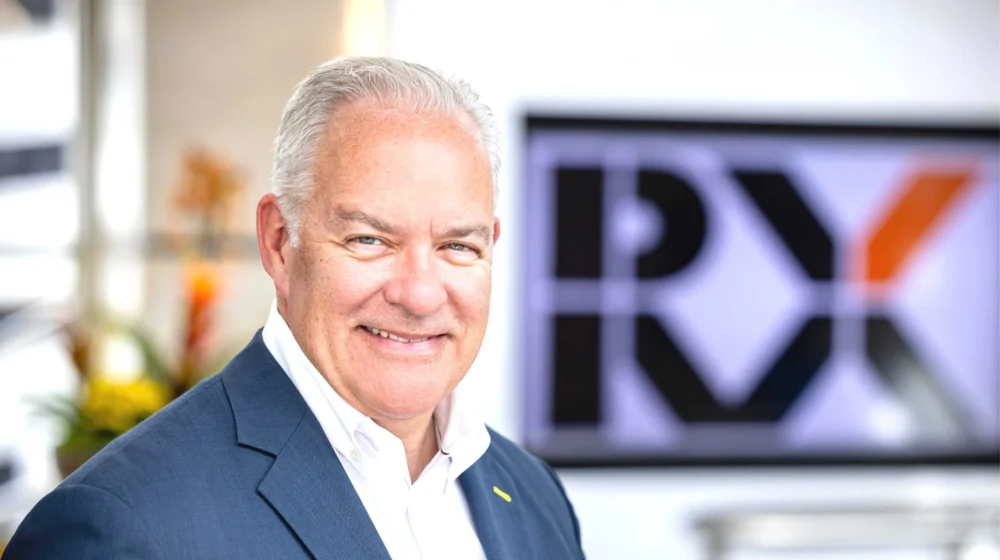
Hugh Jones, CEO of global organiser RX, offers insights into how the company is orchestrating the modern event experience.
What is RX today?
RX today is a business built around helping industries grow. At our core, our mission is simple: helping people and businesses grow by creating communities and building businesses.
We’ve evolved from being primarily an organiser of events into a company that designs environments where industries can grow. Our events remain the heartbeat of those environments, but increasingly we’re helping customers build partnerships, discover opportunities and generate business throughout the year.
So, the mission hasn’t changed, but it has expanded, and the tools we use to deliver it have become much more sophisticated.
How much of RX’s value proposition now comes from technology, data and digital products versus the physical event?
The physical event remains irreplaceable.
Business ultimately runs on trust, and there is still no substitute for standing face-to-face with a customer or seeing a product in person. But technology, data and digital products have become critical to amplifying the value of those interactions.
“What’s changed is that technology increasingly orchestrates the experience”
Five years ago, much of the value was concentrated in the days when an event took place. Today, technology helps customers discover opportunities before they arrive, connect with the right people while they’re there, and continue generating value long after the event ends.
What’s changed is that technology increasingly orchestrates the experience.
When someone walks into an RX event today, they’re using digital tools to discover exhibitors, schedule meetings, navigate the show floor, capture content, generate leads, exchange information, and continue conversations afterwards. AI and analytics help us personalise recommendations, improve matchmaking, and create more relevant experiences for both visitors and exhibitors.
So, I don’t see this as a choice between physical and digital. The future belongs to companies that combine both effectively.
When you look at your strongest events, are you really operating trade shows, or year-round industry communities?
Increasingly, they’re year-round industry communities.
The event remains the moment when the community comes together physically, but the relationships, insights and commercial activity increasingly extend throughout the year.
Success is defined by value and the strongest ones aren’t necessarily the largest events. They’re the ones that bring together the right people and create measurable outcomes.
Customers want more than exhibition space. They want market intelligence, connections, learning opportunities and access to people who can help them grow their businesses. They want a window into the future.
They also increasingly expect their industry communities to reflect the issues that matter to them. Sustainability, diversity, talent development and innovation are no longer side conversations.
Take our big jewellery show JCK as an example. The event itself is an important moment for the jewellery industry, but the community exists long before people arrive in Las Vegas and long after they leave. Our role is increasingly about supporting those connections and conversations throughout the year, not just during the days of the show.
When we think about our role, we’re not asking how we fill halls. We’re asking how we create value for an industry. That mindset changes everything.
What capabilities does RX have today that it didn’t have five years ago?
Let me give you three examples.
First, we’ve become much more deliberate about customer success. Historically, organisers focused heavily on the event itself. Increasingly, we’re focused on helping customers get value before they arrive and after they leave.
Second, we’ve invested heavily in digital products that make outcomes more visible and measurable. Tools such as Lead Manager, Exhibitor Dashboard, RX NOW, Colleqt QR and our AI-powered recommendation capabilities help customers connect with the right people, understand performance and generate more value from participation.
Third, we’ve become much better at understanding patterns across industries. With hundreds of events serving millions of participants, we can often see emerging opportunities and adjacencies much earlier than before.
Our role is to help customers achieve meaningful outcomes and make those outcomes easier to see and measure.
RX is part of RELX, a company built around information, analytics and decision tools. How does that influence the way you think about the future of events and how do the verticals tie together, if at all?
Being part of RELX is a tremendous advantage because it gives us a different lens on the future of events.
Across RELX, around 14,000 technologists are building products, platforms and decision tools for customers around the world. That gives us access to expertise and capabilities that most event organisers simply don’t have.
Increasingly, I think of events as intelligence platforms as well as marketplaces.
Our customers don’t simply want access to buyers and sellers. They want help understanding what happens next. They want insight, signals and direction. They want help seeing around corners.
Being part of RELX means we can draw on deep expertise in analytics, AI and product development to help solve those challenges.
Where do you see the biggest opportunity to create value beyond the days when an event is actually taking place?
The biggest opportunity is helping customers turn participation into measurable business outcomes.
The industry has traditionally been very good at measuring activity: attendance, exhibitors and square metres. Those things matter, but they are proxies for value.
Increasingly, customers are measuring impact in multiple ways. Did they find the right partners? Enter a new market? Generate qualified leads? Build new distribution channels? Increasingly, they’re also asking how they can achieve those outcomes more sustainably.
The future of our industry lies in helping customers achieve better outcomes while making those outcomes more visible, more measurable and, where possible, lower impact.
What are some of the concrete uses of AI inside RX today – for customers and for your own operations?
For attendees, AI helps improve matchmaking, personalise recommendations, optimise exhibitor profiles, identify relevant prospects and improve the overall event experience.
For exhibitors, AI helps them understand attendee behaviour, qualify opportunities and focus on the interactions most likely to generate business value.
Internally, we use AI to help our teams identify growth opportunities, understand customer behaviour and make better decisions faster.
Perhaps the most exciting application is how AI is helping us identify signals that would otherwise be difficult to see. Across our portfolio we can see emerging industries and evolving customer needs much earlier than before.
AI helps us move from data capture to insight delivery.
What will distinguish the event companies that win over the next decade from those that merely survive?
Three things.
First, an obsession with customer value. The winners will focus less on activity and more on outcomes. They’ll understand exactly what problems their customers are trying to solve and deliver measurable value.
Second, the ability to combine technology with human connection. AI, data and digital tools will become essential. But the companies that win will use technology to enhance relationships, not replace them.
Third, adaptability. The market is changing faster than ever. New industries are emerging. Customer expectations are evolving. The organisations that learn, unlearn and relearn fastest will have the advantage.
The future belongs to organisations that continuously reinvent themselves, identify new opportunities early, and help customers navigate change.