With the Africa Exhibition Forum, a new industry event launches this December. Organised by Exhibit Africa and industry consultancy jwc, the event has already secured backing by UFI and the United Nations’ UNIDO, as well as many international stakeholders. EW recently asked two of the organisers, jwc’s founder Jochen Witt and Africa MD Daniel Mesfin about the potential of Africa’s exhibition market:
Why is it now the right time to launch the Africa Exhibition Forum, and has it been long in gestation with the partners Exhibit Africa and supporters at UFI and UNIDO?
DM: First and foremost, our industry is on the rise across Africa. The continent’s imports rose again in 2025, to US$781.5bn, while we continue to build our own manufacturing industries to rely less on imports. Having relevant and strong trade shows is essential and will help catalyse these developments.
Also, venues are already at full capacity in many of the key African markets, both in terms of gross sqm and general availability. If no swift action is taken, this will slow down the growth of the exhibitions industry in Africa.
Because of this, an Africa-focused forum has been in the pipeline for some time. Collectively, with the major industry stakeholders, including UFI and UNIDO, we decided that now is the time to act.
What is the thinking about choosing Nairobi for its inaugural meeting, given that South Africa is generally considered to be the regional international exhibition and events powerhouse?
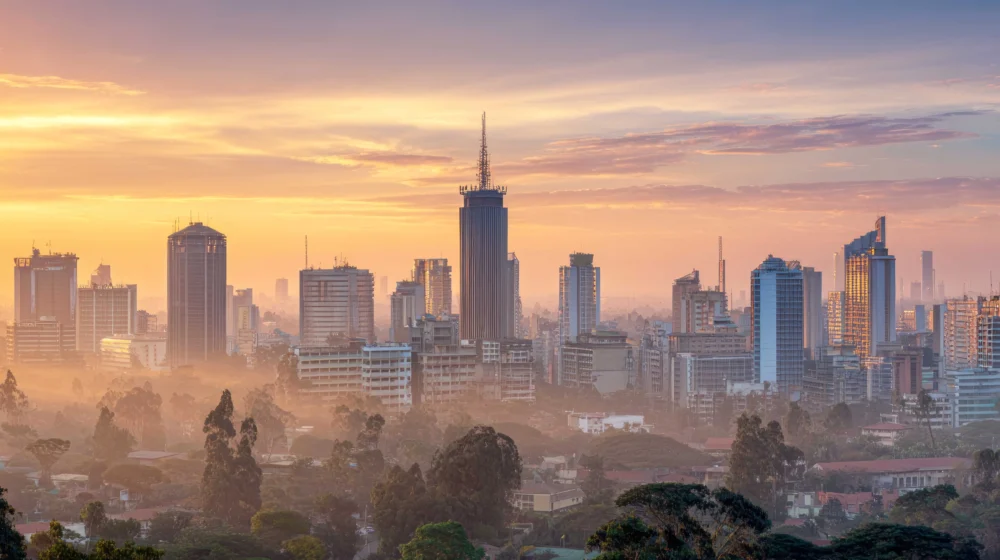
DM: The AEF was conceived as an East African meeting and later expanded, which is why it starts in Nairobi. Sarit Expo Centre is hosting, and the Kenyan government has engaged with the programme, supporting and speaking through the Kenya Tourism Board.

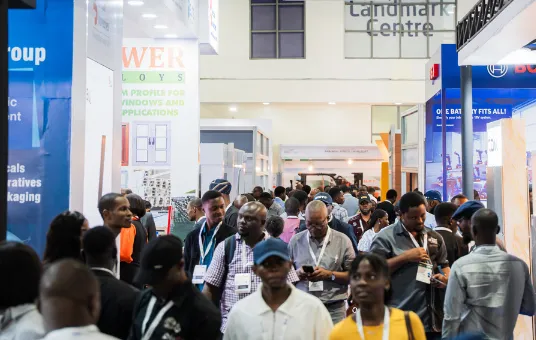
Kenya is well positioned geographically. It is the powerhouse of East Africa, serving as a trade gateway to the wider region and an important base for many regional, continental and global organisations.
Nairobi is also a great example of how the exhibitions industry is fast outgrowing the available infrastructure. It is a good problem to have, but one that needs addressing very quickly.
Future editions of the forum will move around the continent to countries that are actively supporting the development of the exhibition industry.
jwc has identified an ‘infrastructure gap’ on the African continent in terms of large venues and African government commitments. How can this be addressed?
JW: Africa hosts nearly 20% of the world’s population but holds under 2% of global venue capacity, as our data shows. That disproportion illustrates a severe infrastructure deficit. This gap directly limits the continent’s ability to host major international conferences or trade shows.
Addressing the shortage of modern venues and the inconsistent commitment of regional governments requires a coordinated strategy that bridges public policy, alternative financing, flexible design, and professional operations. The strategies for the exhibition and conference business will differ between countries, depending on the size and quality of their venues, but it is essential for all governments to understand the central role business events play for the economic and social development of their countries.
Is Africa’s lagging in this sphere purely a matter of investment or is there a fundamental problem with governance and joined-up strategy on the continent?
DM: I don’t believe money is the issue. Financing can always be found when the business case is strong, pitched in the right way and to the right parties.
When a country understands the importance of business events, intentionally builds an actionable strategy around it and supports private-sector stakeholders in its implementation, big things can be achieved.
Is there really concrete data to justify investment in venues in Africa as opposed to more promising international markets for the trade fair business?
JW: Investment in Africa versus investment in established global exhibition hubs is not an either/or proposition. Modern exhibition organisers increasingly adopt a complementary portfolio strategy, balancing mature markets with emerging destinations or, in other words, balancing short-term growth and profit expectations with medium to long-term perspectives. To have future blockbuster shows across Africa, the build-up is key. Tangible data is thin, building it is also one of the topics we will discuss and is being addressed, especially through the work of UNIDO that jwc is supporting.
For years people have spoken of Africa’s potential in all sorts of spheres. What makes you think an exhibition industry initiative can unite on a continent where division into distinct separate markets with their own dynamics rather than cooperation appears to be entrenched?
DM: Africa functions as a collection of distinct markets rather than a single, unified landscape. Many of these are shaped by deeply rooted ethnic, linguistic, and cultural trading networks, often driving substantial informal trade outside standard customs channels. Because commerce naturally transcends national boundaries, mapping and understanding these authentic trade flows is essential to building a successful exhibition business.
At the same time, governments represent a critical stakeholder group. Each of the continent’s 55 nations pursues its own economic agenda, with varying levels of emphasis on how exhibitions and business events contribute to national growth. This is why the Africa Exhibition Forum (AEF) works to inform governments on the vital role exhibitions and business events play in accelerating overall economic development.
Another factor to consider is that the African Continental Free Trade Area (AfCFTA) is well advanced politically and legally, even though its commercial implementation remains uneven across countries. 54 of the African Union’s 55 member states have signed the AfCFTA and 50 have ratified it; Eritrea is the only holdout.
It is obvious that Africa cannot be treated as a single market, but we believe that cross-border events will increasingly surface. New trade corridors will emerge, and organisers interested in the continent can capture substantial first-mover advantages by anchoring themselves in key gateway hubs early.

How will jwc and its partners work to inform and change this situation? What is the plan?
JW: Besides established and mature markets in Europe and North America, jwc has always been very active in emerging markets, for instance in the early years of the exhibition business in China, Southeast Asia, India and, for about five years now, Saudi Arabia. We are pursuing multiple goals in this regard:
We create awareness among governments of the huge benefits of the exhibition and conference business, and can show destination leaders exactly how business events help them to achieve their policy goals. We help them set up organisations and structures to attract business to their respective countries. We support investors in planning and building venues that meet market demand. We support local organisers in improving their products and services. And we support international organisers in establishing market entry strategies.
We see growing interest in Africa from all these stakeholders, which is why we have established an office in Addis Ababa with Daniel as jwc’s MD for Africa.
You have previously identified three things to hopefully come out of the Forum: 1. Quick fixes for the gaps that cost the continent international events today. 2. Agreement on what industry needs so that high-quality venues get built faster; and 3. A rallying call to the world that Africa needs to be bought into now as a growth market, not later. Can you expand on that?
DM: Too often, we either focus on the now or on the distant future. In this case, we need to do both simultaneously.
There is massive opportunity for trade shows to contribute towards the growth of key sectors across African countries. There are organisers at all levels willing to take the brave step of launching and growing shows. More often than not, however, the conditions are not ideal, be it venue quality and/or size, a lack of local government support or poor urban infrastructure, to name the major culprits.
We need governments to start understanding the importance of trade shows and, in turn, support the development of strong in-country ecosystems. We need existing venues to improve their offering and start planning for expansion. We need more home-grown talent to drive the industry forward, run the venues, lobby parliaments, provide the services and launch more shows.
We are talking here about 1-, 3-, 5- and 10-year strategies, owned by government and jointly implemented with the private sector.
What other goals will you be setting for the Forum and tell us about the content and speakers lined up? What kind of attendance figure would please you?
DM: This first edition will bring together the right people in a relaxed and intimate setting, to have honest and productive debate. We have capped our delegate seats at 80 to help achieve this.
Our speaker line-up is quite diverse, from industry veterans including Matt Denton of dmg events and Greg Hitchen of Terrapinn, who both lead organisations that have invested heavily in trade shows in Africa, to the trailblazers on the ground, including Carole Kadenge, who leads Sarit Expo Centre, our host for AEF, and Paul März of Fairtrade, who has been consistently outstanding in the shows he and his team run across the continent.
Wolfram Diener, president and CEO of Messe Düsseldorf and incoming UFI president, will open the Forum and will also join the panel on what organisers expect from a destination. Naji El Haddad, UFI regional director, will present UFI’s 2026 global trends and its economic impact work. More names will follow.
Daniel Mesfin is CEO of Exhibit Africa and MD Africa for jwc
Jochen Witt is chairman of jwc
The Africa Exhibition Forum takes place 4-5 December, 2026, at Sarit Expo Centre in Nairobi, Kenya. For more, go to https://africaexhibitionforum.org